Series: The Empresses
Giclée print laminated onto aluminum composite, screen-printed with glitter
100 × 100 cm
Issue Number H10-1
Issue /2853
Signed and numbered
"The Empresses" (H-10, 2022) marks a new chapter in Damien Hirst’s exploration of the butterfly as a symbol of freedom, religion, life, and death. A series of five Giclée prints laminated onto aluminum composite panels and screen-printed with glitter, each print depicts images of red and black butterfly wings arranged in a unique kaleidoscopic pattern. The carefully positioned wings appear to be in motion, and their patterns shift, with each print seeming to capture the butterflies in moments of flight in various directions.
Filled with symbolism and featuring a hexagonal composition at its center, “Wu Zetian” was named after the ruthless yet successful Chinese ruler. In 655 AD, Wu Zetian (624–705 AD) married Emperor Gaozong and became empress, much to the dismay of many statesmen, whom she soon eliminated in an infamous reign of terror she imposed on the innermost circles of government. Despite internal political strife and violence, Wu Zetian proved to be a competent leader, bringing stability and consolidating the Tang Dynasty at a time when it seemed to be crumbling.
At the center of “Wu Zetian” is a single pair of butterfly wings, surrounded by a concentric circle of paired wings. This arrangement unfolds into a dynamic and symmetrical hexagonal formation, with three pairs of wings at each tip. This use of the number six to structure the composition echoes its recurrence in various Chinese idioms denoting goodwill, establishing six as a lucky number. The number takes on additional significance when linked to the hexagon, which in China evokes the six directions (North, South, East, West, Heaven, and Earth) and thus represents wholeness, harmony, and balance. These associations also evoke the story of Wu Zetian, whose intelligence, courage, and determination brought stability to her empire.
With exquisite contours featuring bright red wings, the four corners of the pictorial plane are filled with additional arrangements of single or paired wings. The clever transitions between the compositional structures in “Wu Zetian” lend the work a captivating complexity, making it appear to be in constant flux and giving it a sense of movement. Indeed, the composition instills in the viewer the impression that the butterflies are actually alive and fluttering in the viewer’s space.
In “Nūr Jahān,” single or double wings—in various sizes and striking shades of red and black—are arranged in perfectly symmetrical patterns. The wings radiate from the center vertically, horizontally, and diagonally, creating fascinating, kaleidoscope-like patterns. The square focal composition seems to highlight the central pair of wings, with the surrounding wing arrangements appearing to recede, directing the viewer’s gaze toward the center. This intricate tectonic organization evokes Nūr Jahān’s architectural achievements and the glorious mosaics that adorn the Agra Tomb.

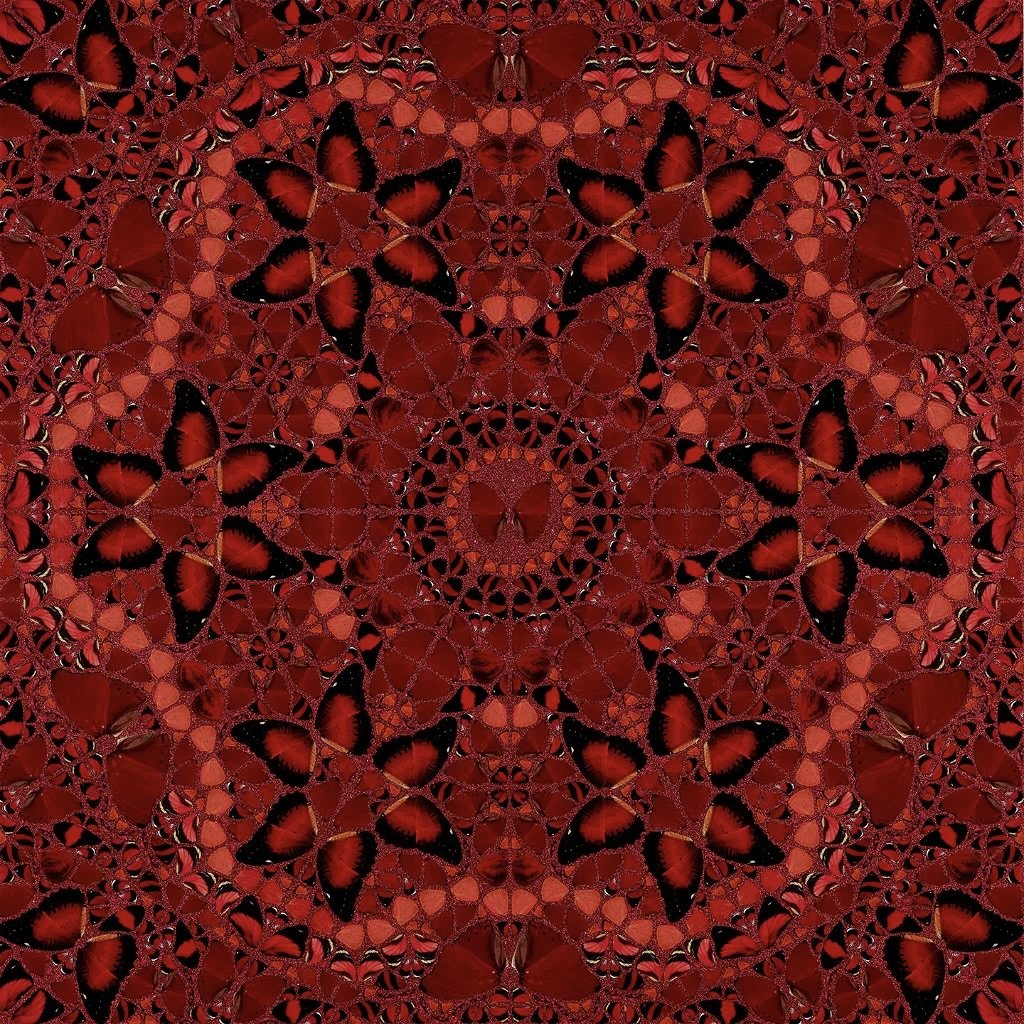 Image 1 of 7
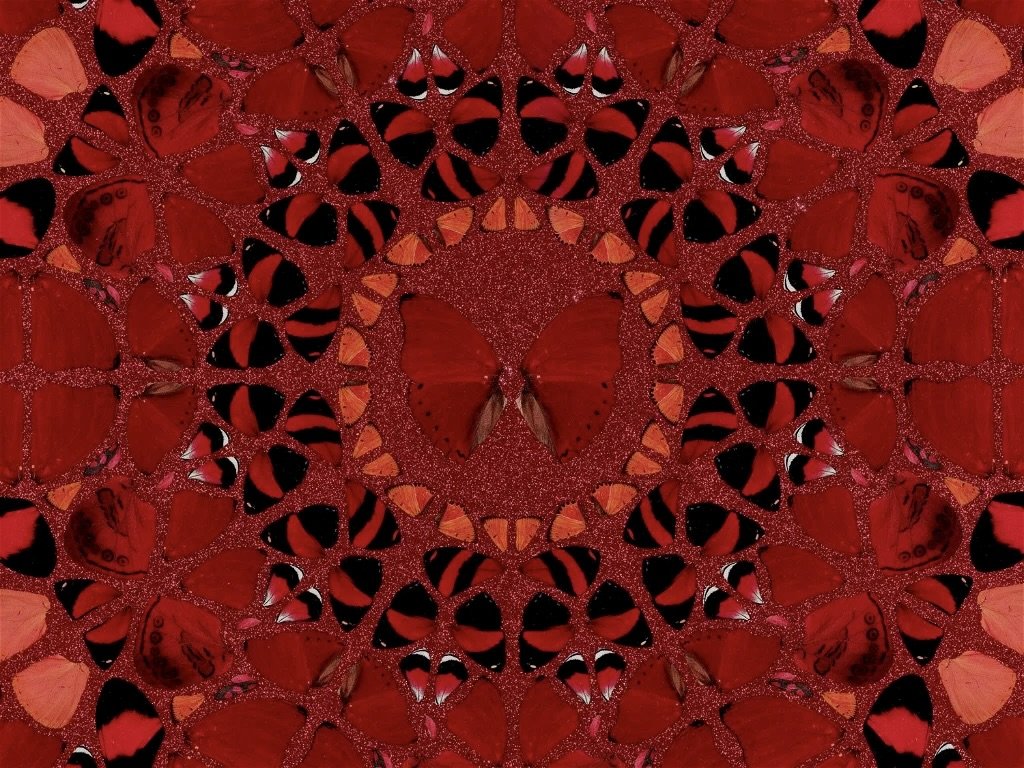 Image 2 of 7
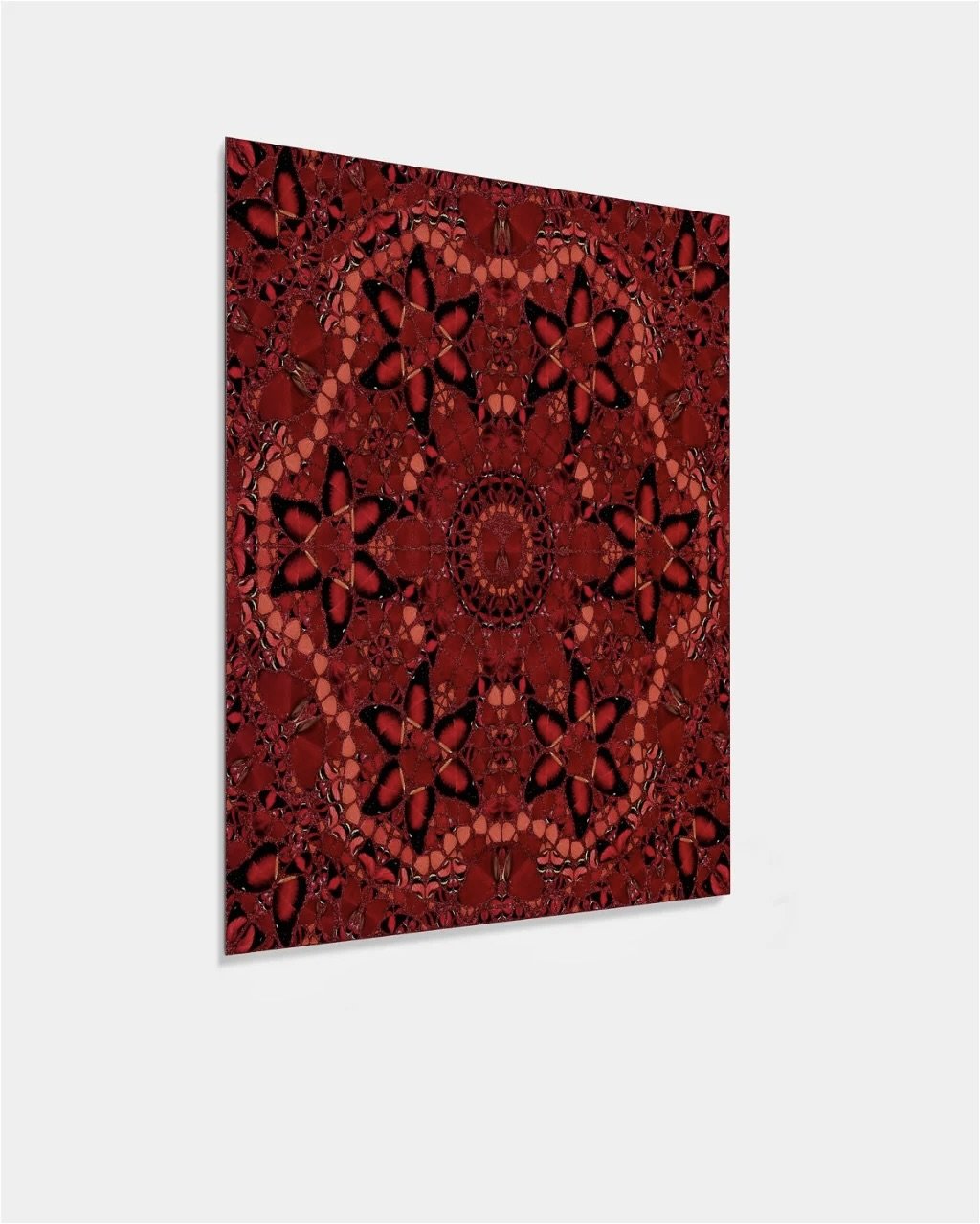 Image 3 of 7
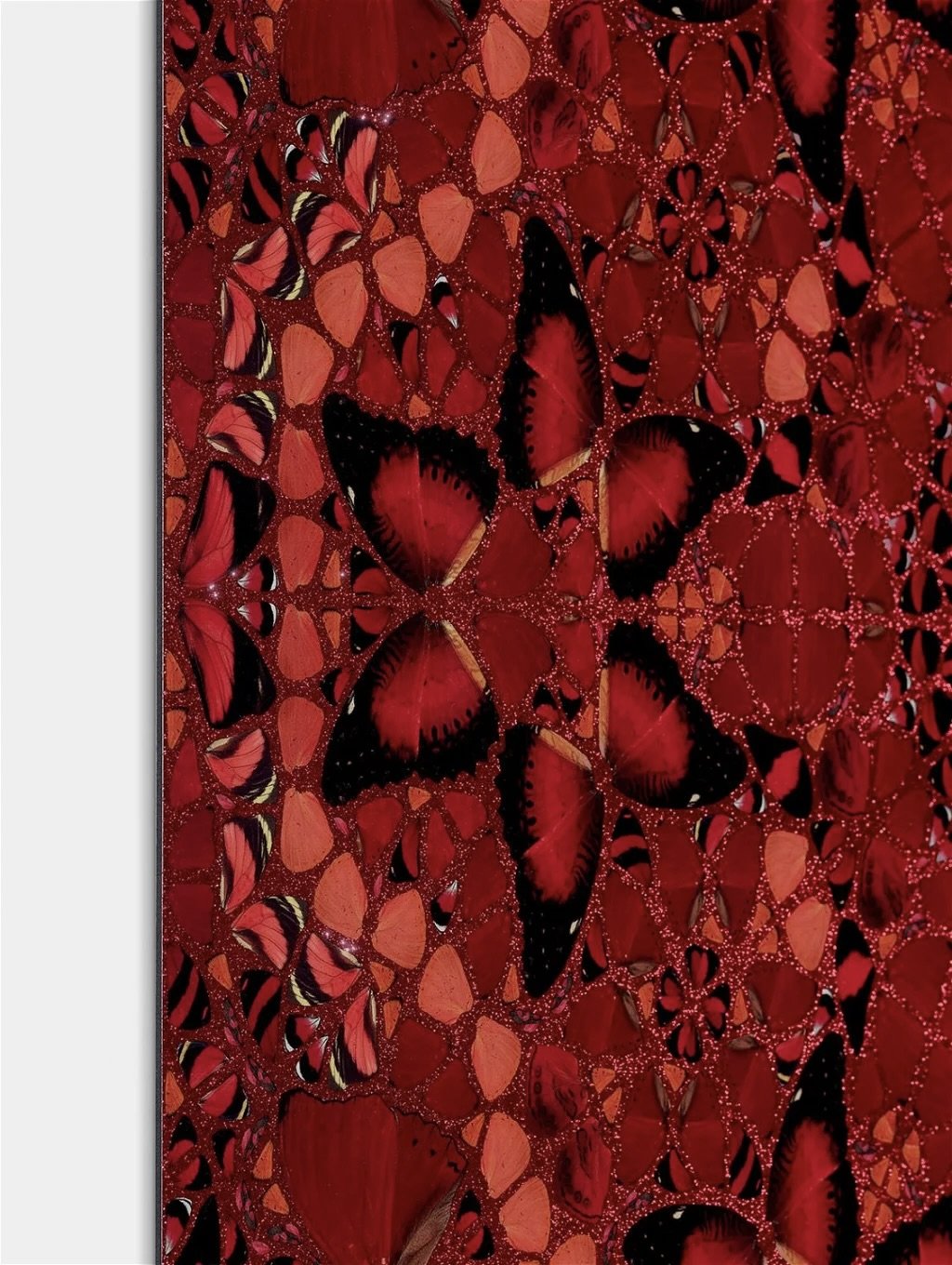 Image 4 of 7
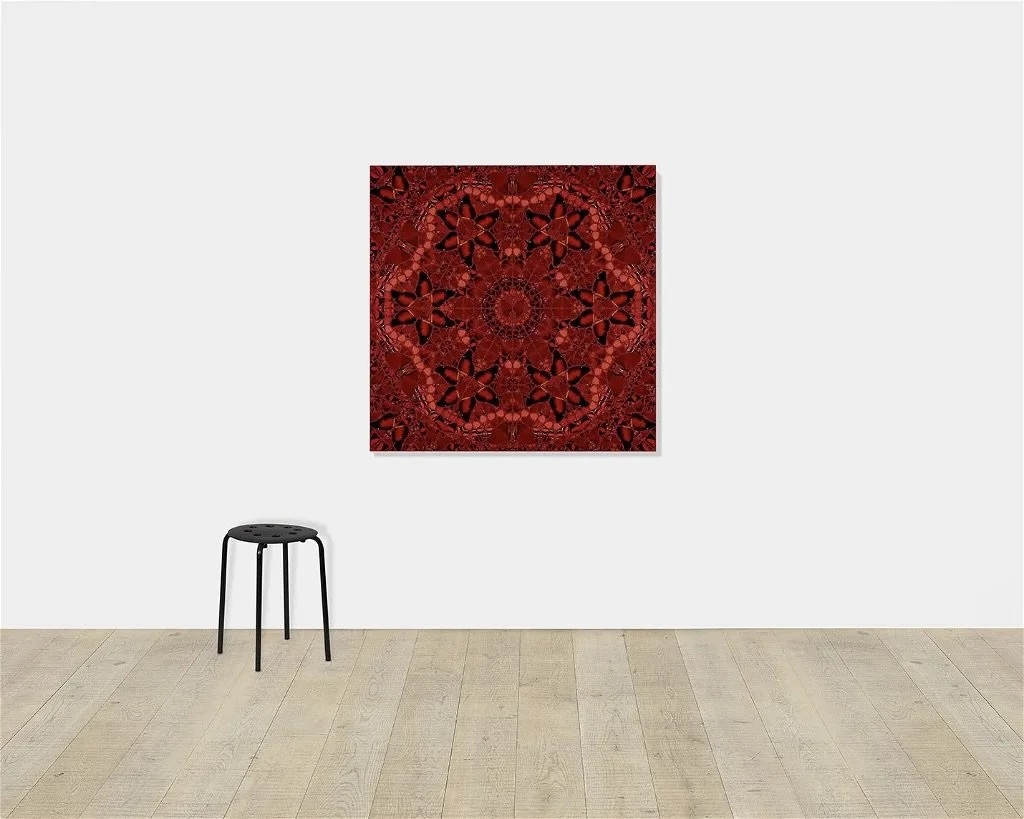 Image 5 of 7
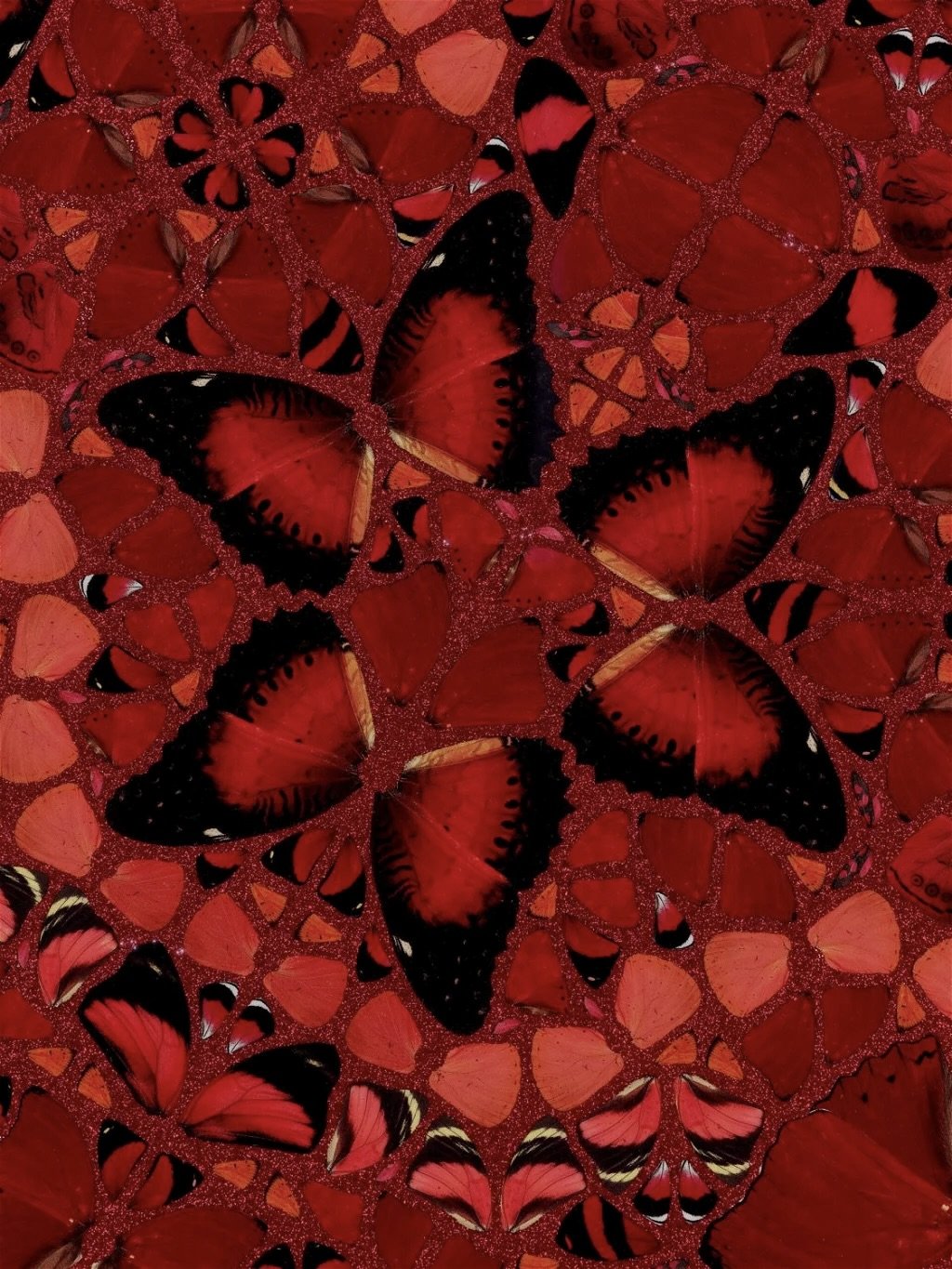 Image 6 of 7
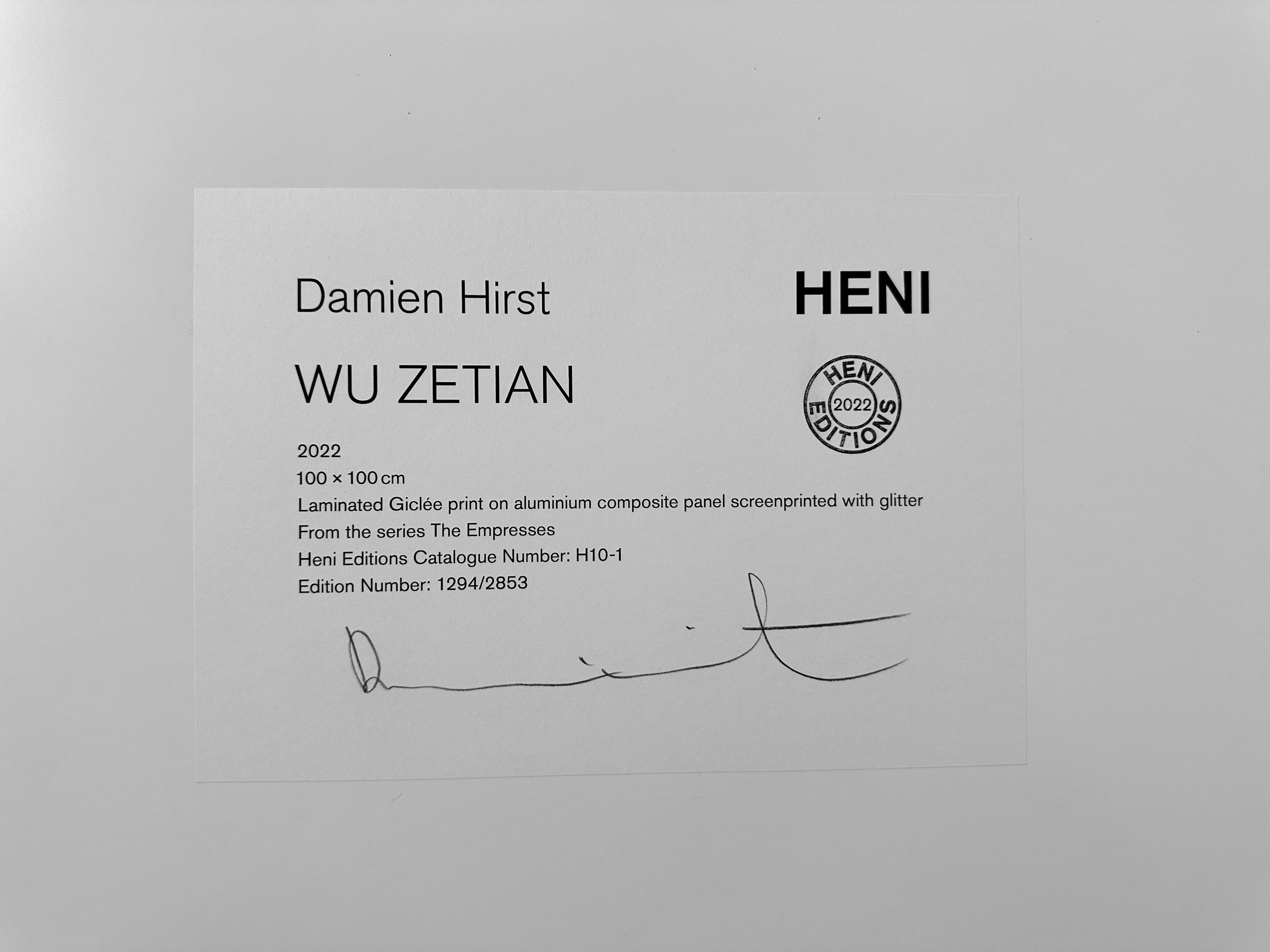 Image 7 of 7